
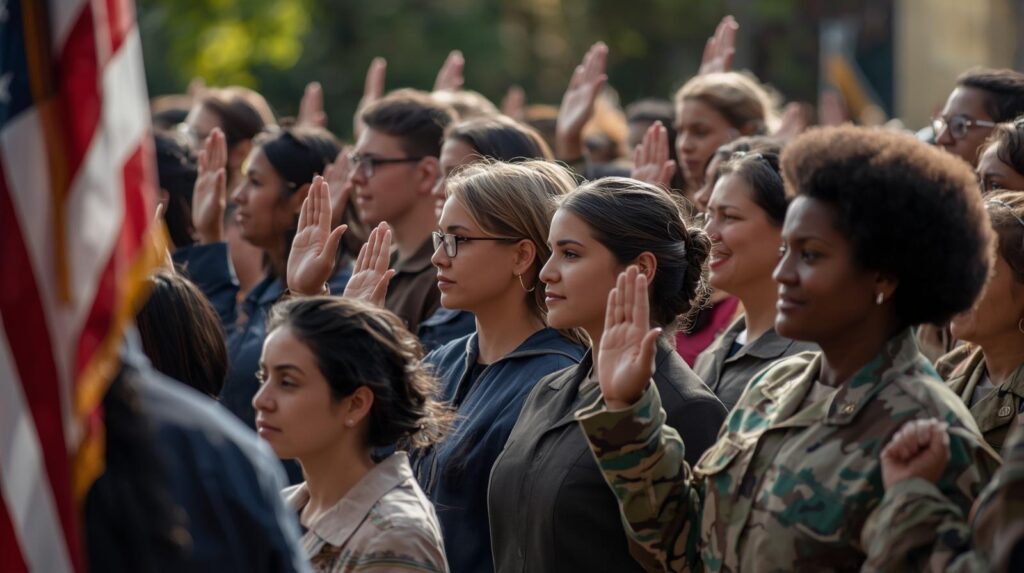
This is the voluntary process for foreign-born, lawful permanent residents (Green Card holders) to become U.S. citizens. It typically requires being 18 or older, at least 5 years of permanent residence (or 3 if married to a U.S. citizen), passing a test, and taking an oath of allegiance. See below for more details.
If your children are under 18 years of age and residing with you as lawful permanent residents (green card holders), they will automatically become U.S. citizens upon your naturalization. After you naturalize, you can apply for a Certificate of Citizenship on the Form N-600 and/or apply for a U.S. passport with USCIS to document their status.
Acquired citizenship means you were born with U.S. citizenship. This applies to children born abroad to U.S. citizen parent(s), often referred to as "citizenship by birth". A Consular Report of Birth Abroad is the document a child's acquisition of U.S. citizenship at birth. It is applied for at a U.S. embassy or consulate, usually before the child turns 18.
Naturalization is the process of becoming a U.S. citizen if you were born outside of the United States.
To apply for U.S. citizenship through naturalization, you must generally:
Be at least 18 years old
Be a lawful permanent resident (green card holder) for:
5 years, or
3 years if married to and living with a U.S. citizen
Demonstrate good moral character
Meet continuous residence and physical presence requirements
Be able to read, write, and speak basic English
Pass a U.S. civics exam.
Continuous residence refers to maintaining your primary home in the United States during the required period.
Your residence may be disrupted if:
You take a trip outside the U.S. lasting more than 6 months.
This creates a presumption that you broke continuous residence (though it may be rebutted with evidence).
You remain outside the U.S. for more than 1 year.
This generally disrupts your continuous residence unless you qualify for a legal exception.
Because travel history can directly affect eligibility, it is important to review your trips carefully before filing.
In addition to continuous residence, you must show that you were physically present in the United States for at least half of the required residency period.
For example:
If applying under the 5-year rule, you must show at least 913 days physically present in the U.S.
If applying under the 3-year rule (married to a U.S. citizen), you must show at least 548 days physically present.
Physical presence does not need to be continuous. However, extended time outside the United States may impact eligibility.
If you have spent significant time abroad, you should consult with an immigration attorney before applying.
You must demonstrate good moral character during the required statutory period (typically the 3 or 5 years before filing).
Issues that may affect eligibility include:
Certain criminal convictions
Failure to pay taxes
Failure to pay child support
Providing false information to immigration authorities
If you have any concerns about your record, a legal consultation is strongly recommended before submitting your application.
After filing Form N-400, you will be scheduled for a naturalization interview.
During the interview:
A USCIS officer will review your application
You will take an English test (reading, writing, and speaking)
You will take a civics test
Under the current version of the exam, you will be asked up to 20 civics questions, and you must answer at least 12 correctly to pass. The questions are selected from an official list published by USCIS.
Unless you qualify for a language exemption, the interview and civics test must be completed in English.
If you do not pass a portion of the test, USCIS may schedule a second opportunity to retake the failed section.
Yes, but extended travel can affect eligibility.
Trips longer than 6 months may disrupt continuous residence.
Trips longer than 1 year generally break continuous residence unless you qualify for an exception.
A review of your travel history is important before filing.
Certain criminal offenses can affect eligibility for naturalization. Even minor issues may impact your case. It is important to consult with an immigration attorney before applying if you have ever been arrested, charged, or convicted.
The civics test covers U.S. history and government. You will be asked up to 20 questions from an official list of 128 civics test questions published by USCIS and must answer at least 12 correctly to pass.
Most applicants must complete the interview and civics test in English. However, some applicants qualify for English exemptions based on age and length of permanent residence.
You will be given two attempts to take the English and civics tests and to answer all questions relating to your naturalization application in English. If you fail any of the tests at your initial interview, you will be retested on the portion of the test that you failed (English or civics) between 60 and 90 days from the date of your initial interview.
As a U.S. citizen, you can:
Vote in federal elections
Apply for a U.S. passport
Petition for certain family members more quickly
Avoid future immigration status issues
Serve on a jury
Access certain federal employment opportunities
Not sure how this applies to your situation? Our team has the knowledge and experience to help. Complete our Immigration Intake form or call our office at 757-422-8472 to schedule a consultation and learn more.