
To qualify for asylum, a person generally must show all of the following:
They are physically present in the United States
They were harmed in the past or have a real fear of being harmed in the future
The harm is connected to one or more protected reasons
The government of their home country caused the harm or cannot or will not protect them
Persecution based on a person’s race or ethnic identity, including harm directed at them because of their ancestry or physical characteristics.
Persecution for practicing, refusing to practice, or changing a religion, including being targeted for religious beliefs or religious activities.
Persecution based on a person’s citizenship, ethnic origin, tribal affiliation, or membership in a national or cultural group.
Persecution due to actual or perceived political beliefs, political expression, activism, or opposition to a government or political group.
Persecution based on belonging to a defined group that shares a common, protected characteristic, such as family ties, gender-based claims, or other recognized social distinctions.
Affirmative asylum is filed with USCIS when you are not currently in removal (deportation) proceedings. You must generally apply within one year of entering the United States, unless an exception applies.
After filing Form I-589, you will attend a biometrics appointment and an interview with an asylum officer. If your case is approved, you may receive asylum status, work authorization, and eventually apply for a green card.
If the application is not approved and you do not have lawful status, your case may be referred to immigration court.
Defensive asylum is requested as a defense against removal in immigration court. This applies when you are already in removal proceedings or your affirmative case was referred to court.
Instead of an interview with USCIS, you present your case before an immigration judge. The government attorney may question you, and you must provide testimony and supporting evidence.
If granted, you receive asylum status. If denied, the judge may order removal.
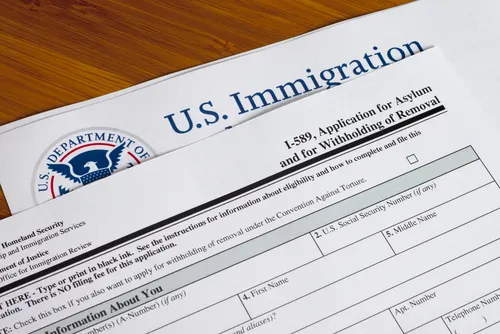
Submit Form I-589 with detailed information about past harm or fear of future persecution, along with supporting evidence.
Applicants are scheduled for fingerprinting and background checks.
Your case is reviewed either by a USCIS asylum officer (affirmative cases) or an immigration judge (defensive cases), where you present testimony and evidence.
If granted, you may live and work in the United States and apply for a green card after one year. If denied, other legal options may be available depending on your case.
Persecution can include serious harm such as:
Physical violence or assault
Threats to life or safety
Unlawful detention or imprisonment
Torture or severe abuse
Sexual violence
Severe economic harm that threatens survival
Government targeting or being targeted by groups the government cannot or will not control
To qualify for asylum, the harm must be connected to at least one protected ground: race, religion, nationality, political opinion, or membership in a particular social group.
Not all dangerous or difficult conditions qualify as persecution. Each case depends on the specific facts and supporting evidence.
Important Notice
These resources are provided for general informational purposes only and are not a substitute for legal advice. Every immigration case is different.
Complete our Immigration Intake form or call our office at 757-422-8472 to schedule a consultation and learn more.
Asylum cases often take several years due to government backlogs. Processing times depend on whether the case is with USCIS or in immigration court.
You may apply for work authorization 150 days after properly filing your asylum application, if no delays are caused by the applicant. Once approved, applicant can begin working using work permit.
If granted asylum, you may live and work in the United States, apply for a Social Security number, petition certain family members, and apply for a green card after one year.
In many cases, a spouse and unmarried children under 21 may be included in your application or may qualify for derivative asylum benefits.
There are limited exceptions for changed or extraordinary circumstances. Eligibility depends on the specific facts of your case.
If denied in immigration court, a judge may issue a removal order. In some situations, appeals or other forms of protection may be available.
Not sure how this applies to your situation? Our team has the knowledge and experience to help. Complete our Immigration Intake form or call our office at 757-422-8472 to schedule a consultation and learn more.